Everything You Should Know About Commercial Deck Oven Technology
- Share
- Issue Time
- Nov 4,2025
Summary
Learn key facts about commercial deck ovens—heating, stones, ventilation, power setup, and care for better baking.
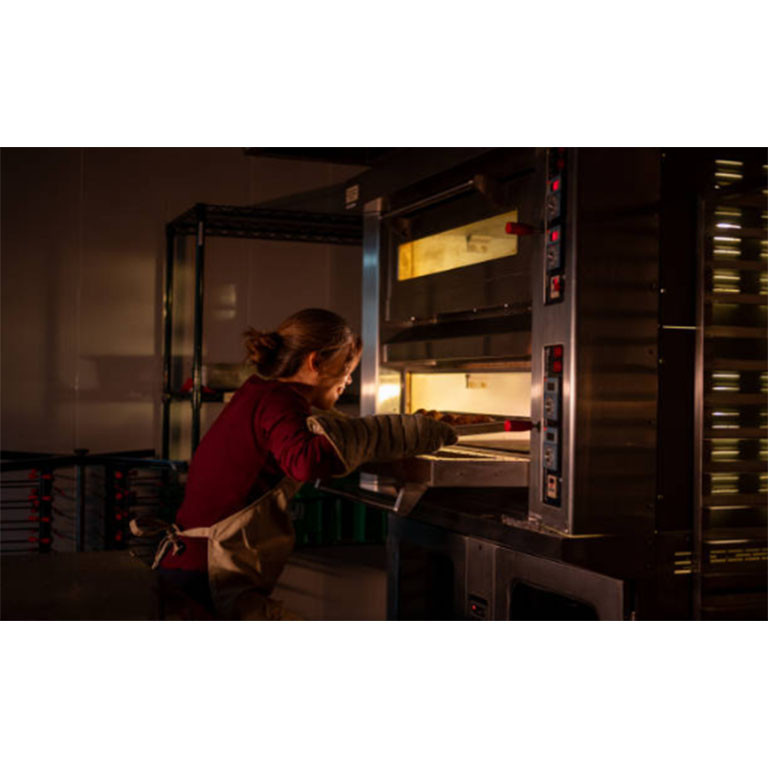
Navigating the world of commercial deck ovens can be overwhelming, with countless models and technical specifications. As SamBake, we understand the complexities and are here to demystify everything you need to know about this essential kitchen equipment. Our brand story is built on a foundation of passion for baking and a commitment to engineering excellence.
This guide will walk you through the ins and outs of commercial deck oven technology, helping you make informed decisions for your business. We'll cover everything from power requirements to installation, drawing on our extensive experience in providing top-tier baking solutions. Whether you're opening your first artisan bakery or upgrading a high-volume pizzeria, understanding these details is the first step toward baking perfection.
Key Takeaways
Choosing the right commercial deck oven is a critical decision that impacts your product quality, operational efficiency, and bottom line. This guide provides a comprehensive overview of the technical and practical considerations involved. Here are the essential points to remember:
- Understand the Core Technology: Deck ovens are prized for their ability to replicate the results of traditional hearth baking. They primarily use a combination of conductive heat from the stone deck and radiant heat from the chamber walls and ceiling. This method is unparalleled for creating the perfect crust on artisan breads and pizzas.
- Plan for Utilities and Installation: Ventilation, power supply, and space planning are critical factors that should not be overlooked. Although electric deck ovens do not produce grease-laden fumes, they still generate significant heat and steam during long baking sessions. Therefore, it is recommended to install a ventilation or cooling system to maintain a safe and comfortable kitchen environment.In terms of electrical requirements, it is essential to verify whether the facility’s power supply is single-phase or three-phase and ensure that the voltage matches. Installation should be carried out by a certified electrician. To ensure stable performance and independent control, we recommend assigning a separate electrical circuit for each oven deck.
- Match the Oven to Your Production Needs: For example, a 4-tray commercial deck oven is ideal for small cafés or restaurants that bake fresh bread daily, while 6-tray or 9-tray large commercial deck ovens are better suited for regional bakery chains or high-output pizzerias. When choosing a commercial deck oven, consider not only your current production volume but also potential future expansion to ensure consistent performance and long-term return on investment.
- Embrace Customization: An oven should adapt to your menu — not the other way around. SamBake's commercial deck ovens support a range of key customization options, including your choice of natural marble stone decks or artificial cordierite stone decks, to suit different baking characteristics and product requirements.
- Leverage Advanced Features (When Needed): Features like steam injection are crucial for baking certain types of bread, as they delay crust formation and allow for maximum oven spring. However, this feature requires a direct water line and often necessitates a floor drain to manage condensation.
- Prioritize Safety and Maintenance: Always adhere to the recommended clearances around the oven for safe operation and maintenance access. Regular cleaning of the baking stones and periodic professional service are essential for longevity and performance. A well-maintained oven is a reliable and profitable asset.
By carefully considering these key aspects, you can confidently select and operate a commercial deck oven that will be the heart of your kitchen for years to come.
Understanding the Foundation: Key Features of Your SamBake Commercial Deck Oven
The commercial deck oven is the engine of any serious bakery or pizzeria. It’s designed to deliver consistent, high-quality results through precise heat application. Unlike convection ovens that use fans to circulate hot air, deck ovens rely on thermal mass—typically from heavy stone hearths—to radiate heat evenly. This method of cooking, combining radiant and conductive heat, is what creates the signature crisp-bottomed crusts on pizza and the beautiful oven spring in artisan breads. At SamBake, we have refined this traditional method with modern engineering to create ovens that are not only powerful and reliable but also tailored to the needs of professional bakers.
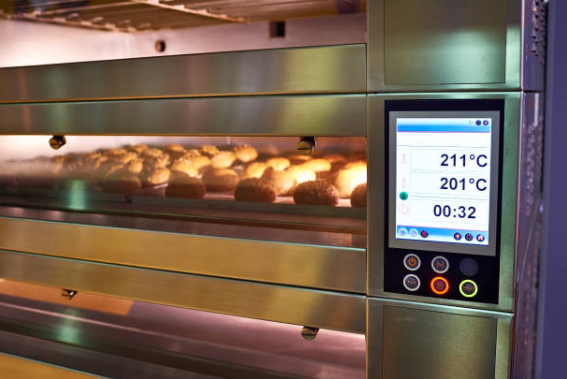
Ventilation Requirements for Your Electric Commercial Deck Oven
Proper ventilation is essential for the safe, efficient, and compliant operation of any commercial kitchen.Although SamBake electric deck ovens do not produce grease-laden vapors like fryers or griddles, they do generate a substantial amount of heat and steam during normal baking operations.Failure to provide adequate ventilation may result in an excessively hot workspace, moisture buildup, and potential violations of local health or fire regulations.
Two Common Ventilation Approaches for Deck Ovens
When it comes to venting the heat and steam that escape as the oven doors open, there are generally two approaches used in commercial kitchens.
- Direct Ducting with an Eyebrow Hood: The eyebrow hood is connected via ductwork that runs directly to the building's exterior. This is an effective, self-contained solution for exhausting heat and steam. However, some manufacturers caution that a fan-powered eyebrow hood connected directly to the oven can create a draft inside the baking chamber, potentially affecting the bake. A passive hood that simply collects and funnels the heat is often preferred.
- Placement Under a Larger Canopy Hood: The more common solution is to place the entire oven setup under a larger, room-wide canopy hood. This is the approach most commercial kitchens use.
Powering Your Commercial Deck Oven: Electrical Considerations
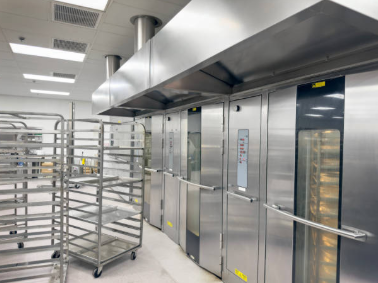
A commercial deck oven is a powerful piece of equipment, and its performance depends entirely on a correct and stable electrical supply. Electrical planning is not something to overlook; it’s as crucial as the oven itself. Incorrect power can lead to poor performance, tripped breakers, and even create a serious fire hazard.
Single vs. Three Phase Power: Performance and Current Needs
Commercial buildings often have access to both single-phase and three-phase power. Understanding the difference is key.
- Single-Phase Power: This is the standard power found in residential homes and some small commercial spaces. It delivers power along two wires (one hot, one neutral). It is sufficient for smaller appliances but can struggle with the high, continuous demand of a multi-deck oven.
- Three-Phase Power: This is the workhorse of industrial and commercial settings. It delivers power across three wires, providing a more constant and stable flow of electricity. For a large appliance like a multi-deck oven, three-phase power is highly recommended. It allows the oven to draw the necessary current more efficiently, ensuring faster heat-up and recovery times, and generally places less strain on the electrical components.
While some smaller, single-deck SamBake ovens may be configured for single-phase power, most multi-deck units are designed for and perform best with a three-phase connection. The higher power draw of larger ovens makes three-phase a virtual necessity for reliable operation.
Voltage Options and Matching Your Building's Specifications
In the United States, commercial buildings typically offer a few standard voltage options, most commonly 208V or 240V. Some may have 480V for very heavy machinery. Your SamBake oven must be ordered to match your building's specific voltage. An oven designed for 240V will underperform significantly if connected to a 208V supply, leading to slow preheating and poor temperature recovery. Conversely, connecting a 208V oven to a 240V supply can damage the heating elements and electrical components.
Before placing your order, have a qualified electrician confirm your building's voltage and phase. This simple step will prevent major headaches and expenses down the line.
Understanding Power Cable, Plugs, and Professional Electrical Work
SamBake deck ovens are high-draw appliances and do not come with a standard plug. They must be "hardwired" directly into your building’s electrical system by a licensed professional electrician. This is not a DIY job. A professional will:
- Run the appropriate gauge power cable from your breaker panel to the oven's location.
- Install the correct type of circuit breaker to handle the amperage load.
- Ensure the connection is secure and compliant with all local electrical codes.
Attempting to do this yourself or hiring an unqualified person is extremely dangerous and will void your oven's warranty.
Optimizing Space and Functionality with Your SamBake Commercial Deck Oven
Beyond the core functions, optimizing your oven’s placement and understanding its operational features are key to maximizing its value. Proper spacing ensures safety and serviceability, while understanding the oven's heating capabilities helps you manage workflow and energy use.
Required Clearances for Safe Operation
Commercial deck ovens produce a significant amount of external heat. To prevent fire hazards and ensure the oven operates correctly, you must maintain minimum clearances between the oven and any surrounding surfaces, especially combustible materials like drywall or wood.
Our installation manual specifies the exact clearances required. Generally, you should plan for:
- Sides and Rear: At least 2-4 inches of clearance from walls to allow for proper air circulation and prevent heat buildup.
- Top: Sufficient overhead clearance is needed to dissipate heat and to comply with any ventilation hood requirements.
- Front: Enough space is required to open the oven doors fully and for staff to work safely with long pizza peels.
Failure to adhere to these clearances is a safety violation and can damage the oven or your building.
Advanced Features and Customization for Your SamBake Commercial Deck Oven
Once you have the foundational aspects of power and placement sorted, you can explore the features that truly tailor a commercial deck oven to your craft. From deck configuration to specialized baking stones, these options allow you to fine-tune your equipment for your specific menu and operational workflow.
Deck Configuration and Height Considerations for Your Commercial Deck Oven
The modular nature of deck ovens is one of their greatest strengths. This allows you to scale your production capacity without replacing your entire oven setup.
Adjusting to Your Needs: Can Decks be Added Later?
Yes, one of the primary advantages of our modular design is that you can add more decks to your SamBake oven stack as your business grows. If you start with a two-deck oven, you can later purchase and install a third or fourth deck. This scalability allows you to invest according to your current budget and production needs, with the confidence that your equipment can expand with your success. The process involves lifting the existing stack, inserting the new deck, and making the necessary electrical connections.
Internal Chamber Height and Doorway Clearance
Two height measurements are critically important:
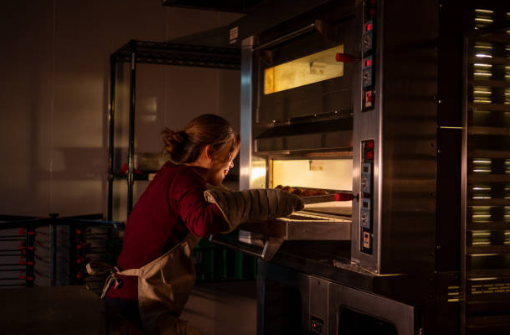
- Internal Chamber Height: This is the vertical space inside the baking chamber, which determines the height of the products you can bake. Standard decks are ideal for pizza, flatbreads, and most artisan bread loaves. If you plan on baking very tall items, like panettone or large boule-style breads, you may need to inquire about special-order decks with increased internal height.
- Doorway Clearance: A fully assembled multi-deck oven is large and heavy. Before ordering, carefully measure all doorways, hallways, and corners on the delivery path to your kitchen. If the assembled oven won't fit, it will need to be disassembled for transport and reassembled on-site, a process we detail later in the installation section.
Specialized Baking with SamBake: High Temperature and Stone Deck Options
The magic of a deck oven lies in its hearth — the baking surface material greatly influences texture, color, and crust quality, especially when working at high temperatures for pizza or artisan bread.
High-Temperature Performance Built In
Every SamBake commercial deck oven is engineered to achieve and sustain the high temperatures required for professional baking.With powerful heating elements, uniform heat distribution, and excellent insulation, our standard ovens can easily handle a wide range of recipes — from rustic loaves to New York–style pizza.
Customizable Stone Deck Options
We offer two main stone options to match your baking needs:
- Natural Marble — Excellent heat retention and smooth, traditional baking characteristics.
- Artificial Cordierite — A durable, modern material that heats quickly and resists thermal shock. Ideal for continuous, high-volume production.
If you have other material preferences, we can accommodate custom stone solutions.
Enhancing Versatility: Steam Injection in Your Commercial Deck Oven
For bakers focused on artisan bread, a steam injection system is a non-negotiable feature. Steam plays a crucial role in the initial stages of baking, creating the crust and crumb texture that defines high-quality hearth bread.
Understanding Steam Injection Functionality and Limitations
When you inject steam into a hot oven chamber just after loading the dough, it accomplishes two things:
- Moistens the Air: The steam-filled environment keeps the surface of the dough moist and pliable.
- Delays Crust Formation: This allows the loaf to expand to its full potential, a process known as "oven spring."
- Creates a Glossy, Crisp Crust: Towards the end of the bake, the steam is vented, and the gelatinized starches on the surface dry out to form a thin, shiny, and wonderfully crisp crust.
Our steam injection system is designed for baking bread. It releases a controlled burst of steam into the chamber. It is not a continuous "steamer oven" designed for cooking vegetables or seafood. A dedicated water line connection is required for this feature to function.
Customization Options for Your SamBake Commercial Deck Oven
Every bakery or kitchen operates differently — with its own workflow, layout, and visual style.At SamBake, we understand that equipment should adapt to your needs, not the other way around.That's why we provide a wide range of customization options to make your deck oven a perfect fit — both functionally and aesthetically.
Customizable Features:
Color Options: Choose from a variety of body colors or specify a custom shade to match your kitchen's design.
Logo & Branding: Add your brand logo or label for a personalized, professional appearance.
Size & Dimensions: We can adjust oven width, height, or tray configuration to fit your available space or production volume.
Control Panel Options: Choose between mechanical knobs or touch-control panels to match your workflow preferences.
Door Design and Operation
The oven door plays a key role in workflow efficiency and heat retention.SamBake deck ovens feature a durable up-and-down opening mechanism that allows the door to stop securely at any desired angle, giving users better control and safety during baking operations.This design is carefully engineered for consistency and durability — while the mechanism itself is fixed for reliability, the exterior appearance and handle design can be customized upon request.
Built Around You
From compact bakery setups to full-scale production lines, SamBake customization helps you build a workspace that reflects your brand identity and maximizes efficiency.
SamBake Support: Delivery, Installation, and Ongoing Care for Your Commercial Deck Oven
Your relationship with SamBake doesn’t end when you purchase an oven. From the moment it leaves our factory to its daily operation in your kitchen, we provide comprehensive support to ensure you get the most out of your investment. Our commitment is detailed in our brand story, which highlights our dedication to quality and customer success.
Seamless Delivery and Installation of Your Commercial Deck Oven
Receiving and installing a large piece of equipment like a commercial deck oven requires careful planning. We've streamlined the process to make it as smooth as possible.
Unpacking and On-Site Assembly
Your SamBake oven will arrive securely packaged in a crate. The initial unpacking and assembly should be handled by a qualified technician, who will ensure all components are properly fitted and secured. This includes attaching the legs, stacking the decks if it's a modular unit, and preparing it for its final utility connections. Professional installation is a crucial step to ensure safety and performance.
Navigating Doorways: Disassembly and Reassembly for Easy Access
We understand that kitchens are often located in spaces with narrow doorways or tight corridors. If a fully assembled oven stack cannot fit through your entryway, our modular ovens can be disassembled. Each deck can be brought in individually and then reassembled in its final position. This flexibility is a key advantage of our modular design and ensures that a SamBake oven can be installed in almost any location, from a basement bakery to a high-rise restaurant.
SamBake Warranty and Service for Your Commercial Deck Oven
We stand behind the quality and durability of our equipment. Every SamBake oven comes with a comprehensive warranty and is backed by a robust service network.
Comprehensive Warranty Coverage
Your new SamBake commercial deck oven is covered by our manufacturer's warranty, which protects against defects in materials and workmanship. The specific terms and duration are detailed in the documentation provided with your oven. This warranty is our promise of reliability and your assurance of a sound investment.
Operating Your SamBake Commercial Deck Oven: Efficiency and Preparation
Proper operation from day one will set you up for years of successful baking. This involves understanding the initial curing process and operating the oven in a way that maximizes efficiency.
Initial Setup: Seasoning Stones and Curing the Oven
Your baking stones need to be seasoned before their first use. This process involves heating the stones to a specific temperature to burn off any residual manufacturing dust or moisture. It's a simple but necessary step to prepare the baking surface and ensure it's food-safe.
The overall oven also needs to be "cured." This involves running the oven through a heat cycle to burn off any residual oils or coatings from the manufacturing process. Your installation manual will provide specific instructions on the time and temperature for this initial curing.
First Burn-Off: Preparing for Optimal Performance
The first "burn-off" is essentially the curing process. You will likely notice some smoke and odors during this initial heating; this is completely normal. It's a sign that the protective oils and residues are being burned away. This process is crucial for preparing the oven's interior and ensuring that no unwanted flavors are imparted to your first batch of products. Once the burn-off is complete and the oven has cooled, wipe down the interior and your SamBake oven is ready for baking.
Frequently Asked Questions (FAQ)
Here are answers to some of the common questions we receive about our commercial deck ovens.
1. What is the main difference between a deck oven and a convection oven? The primary difference is the heating method. A deck oven uses radiant and conductive heat from static heating elements and hot stone surfaces, mimicking a traditional brick oven. This is ideal for products needing a crisp bottom crust, like bread and pizza. A convection oven uses a fan to circulate hot air, which bakes faster and more evenly for items like cookies, pastries, and roasted meats.
2. Can I bake different products at different temperatures in a multi-deck oven? Absolutely. This is a key advantage of a modular, multi-deck oven. Each deck in a SamBake oven has its own independent top and bottom temperature controls. This allows you to bake sourdough bread at 475°F in one deck while baking a more delicate pastry at 350°F in another, all at the same time.
3. How do I clean the baking stones? The best way to clean deck oven stones is to use a stiff, long-handled brush to sweep away any carbonized flour and food debris after each use. For tougher, baked-on messes, you can use a flat-edged scraper. Never use soap or chemicals on the stones, as the porous material will absorb them and impart off-flavors to your food. You should also never splash water on hot stones, as the thermal shock can cause them to crack.
4. Are your ovens available in gas as well as electric? Yes, while this guide focuses heavily on our popular electric models, we do manufacture gas-powered deck ovens as well. The choice between gas and electric often depends on the utility costs in your area and your baking style. Gas ovens may preheat faster, while electric ovens often provide a more even, radiant heat.
5. What is the typical lifespan of a commercial deck oven? With proper installation, regular maintenance, and correct usage, a high-quality commercial deck oven like a SamBake is a long-term investment that can last for many years, often 15-20 years or even longer. Durability comes from robust construction and high-quality components, which is a core part of our manufacturing philosophy.
Conclusion
At SamBake, our brand story is built on a commitment to providing high-quality commercial deck ovens and comprehensive support. We hope this guide has illuminated the key aspects of commercial deck oven technology, empowering you to make the best choices for your business. From deciphering model numbers to planning for ventilation and power, every detail matters in creating the perfect baking environment. This knowledge is the foundation for producing consistently excellent products that will keep your customers coming back.
Ready to elevate your baking? We're here to help you succeed. Contact us today to discuss your specific needs and discover the perfect SamBake commercial deck oven solution that aligns with your operational goals and budget. Let us partner with you to turn your baking ambitions into reality. We encourage you to share this guide with fellow bakers and entrepreneurs who could benefit from a deeper understanding of this essential kitchen technology.